





If you have been looking at your hosting options and keep coming across the term VPS hosting, you are not alone. It is one of the most discussed kinds of web hosting and for good reason.
VPS hosting really sits in a sweet spot between the affordability of shared hosting and the power of a dedicated server – providing you with some very dedicated resources on a single physical server without having to pay for the entire machine.
For Canadian companies and website owners, it is essential to understand what VPS hosting is and how to choose a reliable VPS hosting provider in Canada.
This will help you avoid either spending more than necessary for resources that you do not need or giving a site less power than it requires when it has outgrown its existing hosting plan.
This guide explains step by step how VPS hosting works and what you should be on the lookout for.
What is VPS hosting?
VPS stands for Virtual Private Server, and it is a hosting service that uses virtualization technology to partition a single physical server into multiple isolated virtual environments. Every setting gets its own guaranteed share of server resources, which are completely separate from those of all other users on that machine.
How VPS hosting works
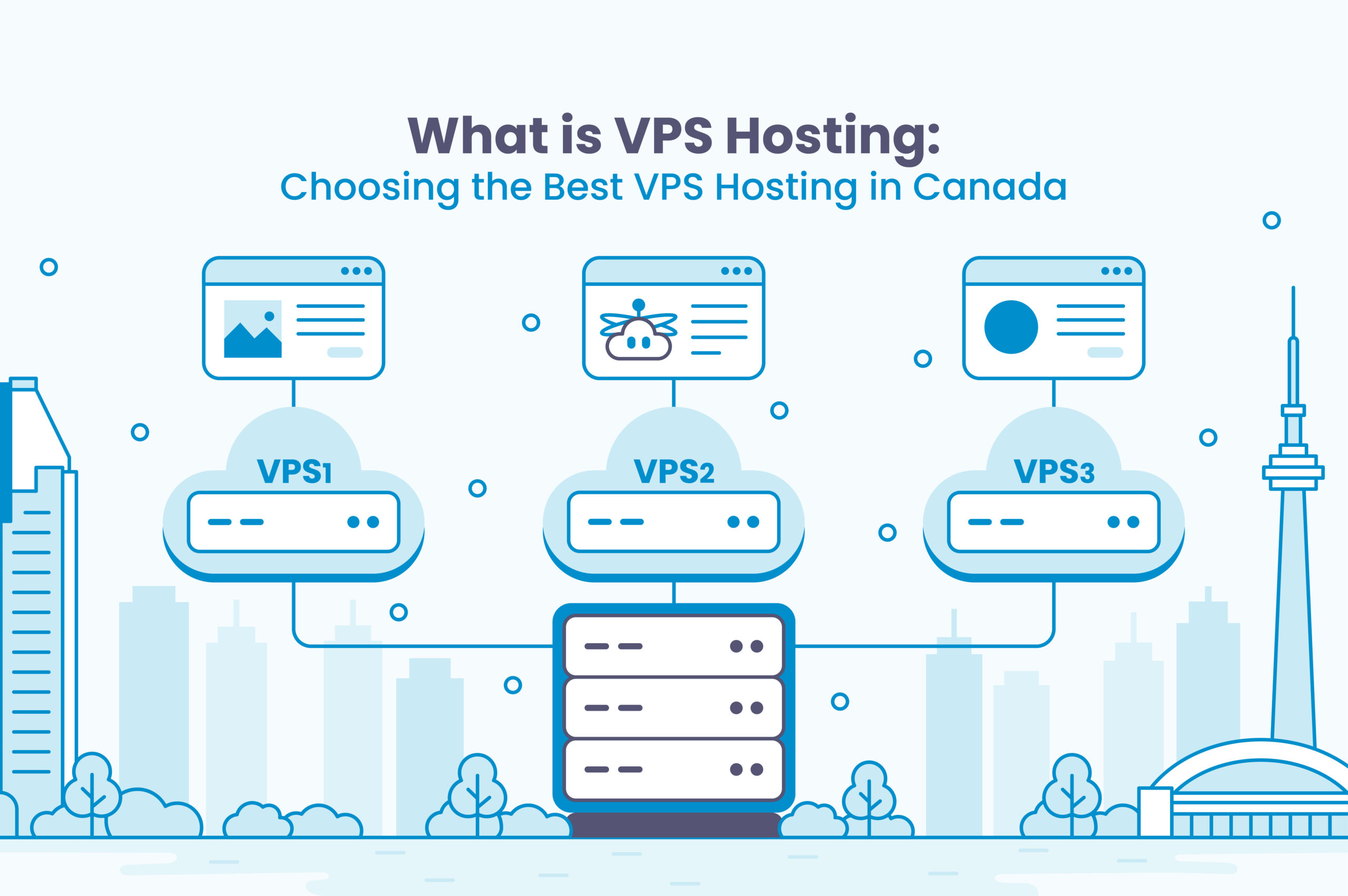
A VPS hosting provider will take a single physical server and, using virtualization software, partition it into multiple virtual machines. Every virtual machine runs like its own independent server, with its own operating system, designated CPU and RAM, and storage space.
You don’t hold title to the actual equipment, yet you’re not sharing your portion of it with anyone else either. That is the main difference from shared hosting, where the operating system and resources are pooled across all accounts on the shared server.
Virtualization Technology Explained
Virtualization technology is what makes VPS hosting truly possible in the first place. A hypervisor – very special software that is installed on the actual server – creates and then supervises numerous virtual servers, giving each one a predetermined quantity of CPU, RAM, and storage space.
Because each virtual server runs in its own isolated virtual environment, if there is ever an issue on one VPS instance, it won’t spill over and affect the others.
Although they’re all really operating on the same physical server. This is the core technology that differentiates VPS hosting from other hosting options on the market today.
How Does VPS Hosting Compare to Shared Hosting?
Really getting to know VPS hosting will click when you see how it compares right against shared hosting – as this is usually the hosting package most people are moving up from initially anyway.
Resource allocation
On a shared hosting plan, your website shares a single physical server – and all its resources – with possibly hundreds of other websites. If one site on that shared server suddenly experiences a traffic surge, it will consume resources that everyone else relies on.
VPS hosting solves this problem by giving each virtual environment a dedicated set of resources. Your CPU, RAM, and storage – nobody else touches them, regardless of what is happening on the remainder of that physical server.
Performance and reliability
Because resources within a VPS are not shared as they are in a shared hosting environment, your website’s performance remains stable even when there’s a sudden increase in traffic elsewhere on the server. VPS hosting provides significantly greater stability for websites in development, custom applications, or any project that simply cannot tolerate those irritating, unexpected slowdowns.
Compared with shared hosting, a VPS server also enables a lot more flexibility over how you configure your hosting environment – including the choice of operating system, control panel, and the software packages you install.
What Types of VPS Hosting Are There?
Not all VPS plans work quite the same way when you really start using them every day. The kind of VPS hosting you select basically boils down to how much server administration you intend to handle yourself, as opposed to letting your hosting company handle it for you.
Managed VPS Hosting
In a managed VPS hosting situation, your hosting service is responsible for the technical details – so that means software updates, security patches, server monitoring, and resolving problems are all taken care of by your host.
If you would like to benefit from the resources of a VPS server but don’t wish to be a server administrator yourself, this is the better option. Manitoba Cloud, for example, offers managed VPS hosting solutions for clients in Canada who want to run their business without worrying about server settings.
Unmanaged VPS Hosting
An unmanaged VPS hosting plan requires you to be fully responsible for server administration yourself. Yes, from setting up your operating system to configuring security settings, carrying out software updates, and identifying and repairing any issues that arise.
It’s cheaper than a managed VPS hosting plan, though it requires actual hands-on IT knowledge. This type of VPS hosting is perfect for developers or IT groups who want complete control over their server setup but don’t need to pay extra for management services they won’t use.
Semi-Managed VPS Hosting
Semi-managed VPS hosting plans sit somewhere in between these two scenarios. In general, your hosting company handles the core server work, such as security patching and very basic monitoring.
At the same time, you decide on the software configuration and manage application-level tasks yourself. It’s a good compromise for companies looking for some ‘hands off’ assistance but still want the freedom to design their own virtual environment.
Cloud VPS hosting
Cloud VPS hosting applies the same concept of a virtual private server, running it across a network of interconnected servers rather than a single physical server. If one physical machine within that network faces a hardware failure, your virtual environment will automatically move to another – with absolutely no discernible downtime.
This makes cloud hosting a very strong option for websites that have an urgent need for additional redundancy and can’t live with outages. It is becoming increasingly popular amongst VPS hosting providers looking to give stronger reliability commitments.
When Should You Move from Shared Hosting to a VPS?
Choosing between shared and dedicated hosting isn’t always crystal clear, but there are clear indicators that tell you when your website has really outgrown shared hosting.
- Your site continually slows down when there are traffic spikes – even though your own content hasn’t been updated
- The current shared hosting plan stops you from setting up bespoke software or adjusting server-level settings
- You need root access so that you can configure your very own hosting environment
- Your website’s traffic keeps growing steadily and gives no sign of slowing down
- There is a plan to run applications that consume lots of resources that a shared server simply won’t be able to handle
If two or more of these ring true, then it’s a very strong indication that a VPS hosting plan – rather than trying to push your website further within a shared hosting setup is just what’s needed for your website right now.
What Should You Look for in a VPS Hosting Provider in Canada?
Not all VPS hosting providers are made equal, and to Canadian companies particularly, some factors really matter a lot more than a fancy pricing page. Here’s what you should actually focus on when evaluating VPS hosting services in Canada.
Data Centre Location
The actual location of your VPS server physically has implications for both speed and legal compliance. Having a hosting provider with a Canadian data centre significantly reduces latency for visitors in Canada and ensures Canadian data protection laws, such as PIPEDA, cover your data.
Manitoba Cloud is one of a handful of VPS hosting providers actually created with a specific focus on Canadian data residency – something very important if your business deals with highly sensitive customer information.
Server Resources and Scalability
Have a good look at exactly what resources are included within each VPS plan – like CPU cores, RAM, SSD storage, bandwidth and confirm how smoothly you can scale up those resources as your website expands.
A reliable VPS hosting provider lets you upgrade your plan without moving your entire environment to a new virtual machine.
Support and Server Administration
When you are dealing with a problem you cannot resolve at 2 a.m., look for a hosting company with very good support, preferably a Canadian support group who really knows about your specific hosting environment.
This will be crucial if you have selected an unmanaged VPS (Virtual Private Server), and you may occasionally need to seek assistance from the provider’s team yourself.
Frequently Asked Questions
Is VPS hosting better than shared hosting?
Yes, it is for many development websites. VPS hosting provides dedicated resources, performs much better under peak traffic, and offers root access, which shared hosting doesn’t. Shared hosting remains a sensible, cost-effective solution for new small sites with very few visitors.
How much does VPS hosting cost in Canada?
The cost of VPS hosting varies widely by provider, number of resources, and whether it is managed or unmanaged. The initial VPS plans generally cost anything from $5 to $20 every month, and with managed VPS hosting and high-end resource plans costing significantly more – all determined by your very particular hosting requirements.
Do I need technical skills to use VPS hosting?
It all hangs on what kind of VPS hosting plan you’re going for. If you opt for unmanaged VPS hosting, then you’ll need actual server administration knowledge. Managed VPS hosting, as offered by Manitoba Cloud, really takes care of all the technical bits for you – thus making VPS hosting very accessible even when you don’t have extremely advanced technical knowledge yourself.
What is the difference between VPS hosting and dedicated hosting?
VPS hosting sets up multiple virtual environments, each running on a single physical server, with its own exclusive resources. On the other hand, dedicated hosting offers an entire physical server all to just one client. While dedicated hosting offers much more brute force, it comes at a much higher price point than almost all VPS hosting plans.
Can I upgrade from VPS hosting to a dedicated server later?
Yes. Almost all hosting suppliers and those based in Canada like Manitoba Cloud – have a transparent upgrade path from VPS hosting to dedicated hosting when your site or application has outgrown even the most powerful dedicated VPS resources. The flexibility here is just one advantage of choosing a supplier that offers multiple hosting plans.
Conclusion
VPS hosting really does fill a truly necessary space between shared hosting and dedicated servers. It gives you fully committed resources, even greater control and far better performance but at less than the whole cost of an actual physical server.
Managed, unmanaged, semi-managed, or cloud-based, the best kind of VPS hosting for you will depend on both your technical comfort level and how much server administration you want to handle yourself.
If you are searching for a VPS hosting provider in Canada, focus on the location of their data centres, the scalability of their server resources, solid security measures, and responsive support.
If having data that adheres to local regulations and having support locally is vital to your business, then you should really think about providers like Manitoba Cloud. We provide Canadian data residency and offer very well-managed VPS options.
Always ensure you match your VPS plan to your actual hosting requirements, rather than simply looking for the cheapest option available – your site’s performance really hangs on it.